Physical Address
304 North Cardinal St.
Dorchester Center, MA 02124
Physical Address
304 North Cardinal St.
Dorchester Center, MA 02124

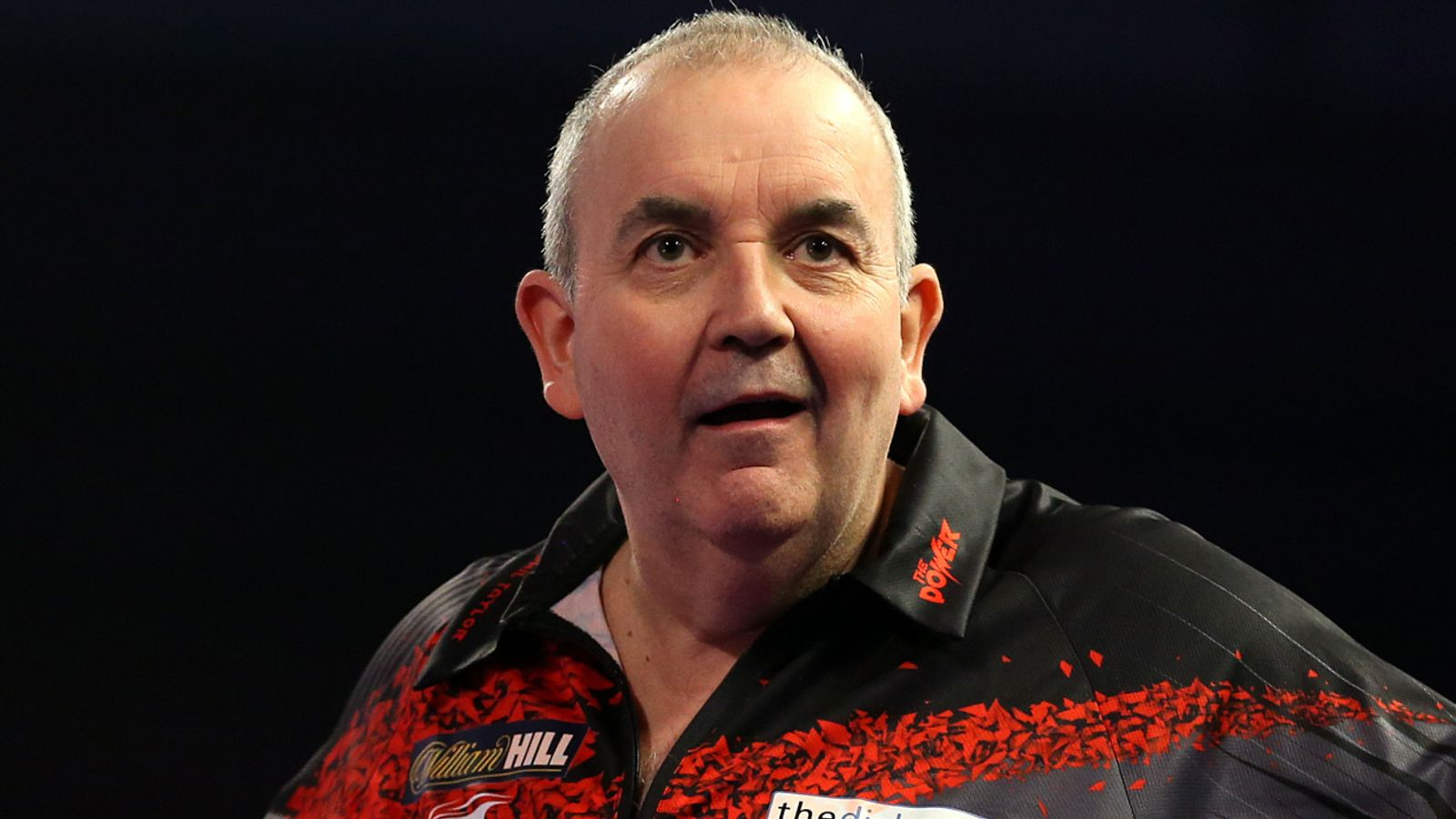
When people debate the greatest player in the history of darts, one name almost always dominates the conversation: Phil Taylor. Known as “The Power,” Taylor’s dominance over the sport for more than two decades reshaped professional darts and set records that may never be broken. But does that automatically make him the greatest darts player ever?
Taylor’s achievements are staggering. Over his career, he won 16 World Championships, the vast majority of them at the PDC World Darts Championship. His titles came across three different decades, highlighting not just brilliance but extraordinary longevity.
Beyond the world titles, Taylor accumulated more than 80 major professional tournament victories. Events such as the World Matchplay, Premier League Darts, and World Grand Prix were frequently dominated by him during the peak of his career. At times in the 1990s and 2000s, it felt less like a competition and more like a question of who might finish second.
Equally impressive was Taylor’s scoring power. He popularized a more aggressive, high-scoring style of darts and was one of the first players to consistently average over 100 in major matches. His relentless ability to hit 180s and clinical checkouts made him a nightmare opponent.
Taylor’s greatness isn’t only measured in trophies. His influence helped transform professional darts into a global sport.
After joining the newly formed Professional Darts Corporation in the early 1990s, Taylor became the face of the organization during its formative years. His dominance and charisma helped bring television audiences and sponsorship to the game, raising prize money and professional standards.
For many modern players, Taylor set the benchmark. Today’s elite players—who routinely average over 100—are operating at a level that Taylor helped normalize.
Despite his achievements, some fans argue that comparing eras makes the debate more complicated.
Taylor spent much of his prime competing against a field that was arguably weaker than today’s. While he faced strong opponents such as Raymond van Barneveld, John Part, and Dennis Priestley, the depth of the modern game is far greater.
Players such as Michael van Gerwen, Luke Humphries, and Gerwyn Price compete in an era where high averages are common and the competitive field is deeper than ever.
In today’s darts landscape, even early-round matches can feature elite-level scoring. That level of depth makes dominance harder to sustain for long periods.
However, Taylor’s supporters argue that dominance is exactly what defines greatness—and no one dominated like he did.
From the early 1990s until the mid-2010s, Taylor remained a regular contender in major tournaments. Even late in his career, he was still capable of producing extraordinary performances, including televised nine-dart finishes and tournament wins.
His final season in 2018 ended fittingly with a runner-up finish at the PDC World Darts Championship, proving he could still compete with players decades younger.
Greatness in sport is always subjective. Modern players may benefit from stronger competition, improved training methods, and a fully professional environment.
Yet when considering trophies, longevity, influence, and dominance, it is difficult to find a stronger résumé than Phil Taylor’s.
While debates will continue as the sport evolves, Taylor’s achievements set a benchmark that every darts player is still chasing. For many fans and analysts alike, “The Power” remains not just one of the greatest—but quite possibly the greatest darts player the sport has ever seen.